

Imagine trying to stop a rocket… with a beam of light.
No missile trail. No explosion in the launcher. Just a silent flash, almost invisible, traveling at 299,792 kilometers per second. That’s the promise behind the Iron Beam Laser, Israel’s high-energy laser air defense system that aims to rewrite the rules of modern warfare.
For years, missile defense has meant launching another missile to intercept the incoming one. Effective? Yes. Affordable at scale? Not exactly. Each interceptor in systems like Iron Dome can cost tens of thousands of dollars.
Now picture replacing that with a pulse of concentrated energy powered mostly by electricity. That’s not science fiction. That’s the core idea behind the Iron Beam laser defense system.
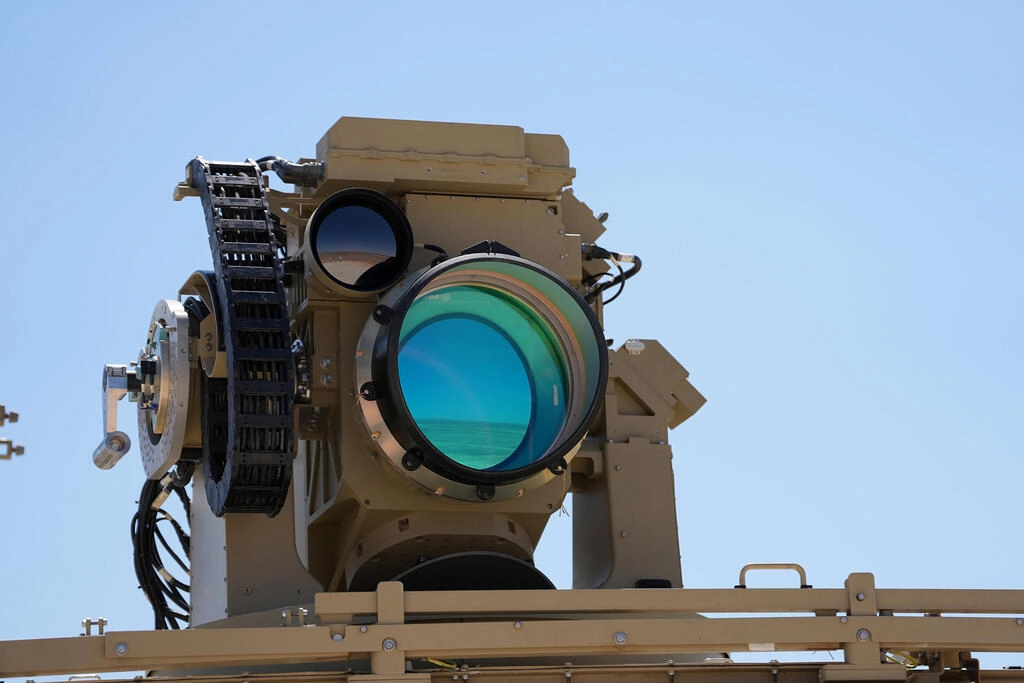
Developed by Rafael Advanced Defense Systems in partnership with Israel’s Ministry of Defense, the Iron Beam Laser is designed to intercept short-range threats, rockets, mortars, drones, and UAVs, using directed energy instead of traditional explosives. It forms the lowest tier of Israel’s multi-layered air defense network, complementing systems like Iron Dome, David’s Sling, and Arrow.
But here’s the twist most people miss: Iron Beam isn’t just another defense project. It’s a strategic cost equation shift.
Instead of asking, “Can we shoot it down?” defense planners are now asking, “Can we shoot it down for pennies?”
And that question, more than the laser itself, is what makes Iron Beam Laser such a disruptive force in 21st-century military technology.
What Is the Iron Beam Laser System, and Why Was It Built?
At its core, the Iron Beam Laser is a high-energy directed-energy weapon designed to intercept short-range aerial threats. But that technical description barely scratches the surface.
Think of Israel’s air defense like a layered security system for a house. The Arrow system handles long-range ballistic missiles, threats flying high and far. David’s Sling tackles medium-range projectiles. Iron Dome deals with short-range rockets. And now, the Iron Beam Laser steps in at the lowest tier, targeting rockets, mortars, and drones within roughly 7–10 kilometers.

It wasn’t built just because lasers are flashy. It was built because math demanded it.
During high-intensity conflicts, thousands of short-range rockets can be launched in days. If each interceptor missile costs anywhere from $40,000 to $100,000, the defensive bill escalates fast.
Meanwhile, many of those incoming rockets cost only a few hundred dollars to produce. That imbalance, cheap offense, expensive defense, creates strategic strain.
The Iron Beam laser defense system flips that equation.
Instead of launching a missile, the system focuses a powerful fiber laser onto the target, heating it until structural failure occurs. No warhead. No debris from an interceptor. Just concentrated energy delivered with surgical precision.

Developed by Rafael Advanced Defense Systems, Iron Beam has been in development for over a decade, with public demonstrations beginning in the early 2010s and major interception tests announced in recent years.
And here’s the subtle shift: Iron Beam isn’t replacing Iron Dome. It’s designed to work alongside it. Missiles still handle longer distances or bad weather conditions. The laser handles close-range saturation attacks.
Not a replacement. A multiplier.
How the Iron Beam Laser Works
Let’s strip away the Hollywood version for a second.
The Iron Beam Laser doesn’t slice missiles in half like a movie prop. It doesn’t create dramatic mid-air explosions on contact. What it actually does is quieter, and in many ways, more impressive.
The system uses a high-energy fiber laser, reportedly in the 100+ kilowatt class, to concentrate an intense beam of light onto a small نقطة on a moving target. That beam heats the surface rapidly, within seconds, until something critical fails. It could be the casing of a rocket, the wing of a drone, or the guidance section of a UAV.
No blast. Just thermal overload.
Here’s the simplified engagement chain:
- Detection – Radar identifies an incoming threat.
- Tracking – Electro-optical sensors lock onto it with precision.
- Beam Control – Adaptive optics stabilize and focus the laser.
- Engagement – The laser fires for several seconds.
- Neutralization – The target burns, destabilizes, and falls.
And because the laser travels at the speed of light, there’s virtually no travel time. Once locked, engagement is immediate.
Now, here’s something rarely emphasized: accuracy matters more than raw power.
The system must maintain a steady beam on a fast-moving object while compensating for atmospheric distortion, heat waves, dust, humidity. That requires extremely advanced beam control algorithms and stabilization technology.
Unlike missile systems, there’s no physical interceptor to adjust mid-flight. The beam must stay focused continuously. Even slight jitter reduces effectiveness.
That’s why the Iron Beam Laser isn’t just about power output. It’s about precision optics, real-time computing, and sensor fusion working together in milliseconds.
It’s less “laser cannon” and more “optical brain with teeth.”
Key Features and Strategic Advantages of the Iron Beam Laser
Now here’s where things get interesting, because the Iron Beam Laser isn’t just another defensive gadget. It changes the economics of air defense in a way that feels almost unfair.

Let’s talk cost first.
A traditional interceptor missile can range between $40,000 and $100,000 per shot depending on configuration and supply chain conditions. In contrast, a laser engagement primarily consumes electricity. Estimates often place the cost per Iron Beam laser shot at just a few dollars’ worth of power.
That difference isn’t incremental. It’s exponential.
Here’s a simple comparison:
| Feature | Iron Beam Laser | Traditional Interceptor Missile |
| Cost per Engagement | Estimated <$10 (electricity-based) | $40,000–$100,000 |
| Speed of Engagement | Speed of light | Seconds (physical flight time) |
| Ammunition Limits | Power-dependent | Limited by missile stockpile |
| Reload Time | Immediate (power recharge) | Requires physical reload |
Another advantage? What defense analysts call an “unlimited magazine.”
As long as there’s power, grid connection or generator, the Iron Beam Laser can continue firing. There’s no truck delivering new interceptors. No waiting for manufacturing cycles. In saturation attacks, that matters.
And then there’s precision.
Unlike missile interceptors that detonate near a target, lasers can engage specific structural points. That reduces collateral debris from interceptors themselves. In dense urban defense environments, that subtle distinction could mean fewer unintended consequences.
Of course, it’s not invincible. Weather can interfere. Heavy clouds, dust, or humidity can scatter or weaken the beam. That’s why the laser complements missile systems rather than replaces them.

Still, from a strategic standpoint, Iron Beam doesn’t just defend territory, it stretches defensive budgets dramatically.
And in modern warfare, sustainability is as powerful as firepower.
Limitations of the Iron Beam Laser System
Now let’s ground this in reality.
For all its elegance, the Iron Beam Laser isn’t a magic wand. Physics, stubborn, unbending physics, still sets the rules.
The first limitation is weather.
Lasers travel through the atmosphere, and the atmosphere is messy. Dust, fog, heavy clouds, humidity, even heat shimmer rising off desert terrain can scatter or weaken a high-energy beam. Think about how car headlights diffuse in thick fog, that same principle applies here, just at a far more advanced scale.
In clear conditions, performance is optimal. In poor weather? Efficiency drops. That’s why missile-based systems like Iron Dome remain essential backups.

Second: range.
The Iron Beam Laser is designed for short-range threats, generally within about 7 to 10 kilometers. Beyond that, beam dispersion reduces intensity.
You can increase power, but scaling laser energy isn’t as simple as turning a dial. Power generation, cooling systems, and beam quality all become limiting factors.
Here’s a quick reality check:
| Limitation | Why It Matters |
| Weather Sensitivity | Atmospheric particles weaken beam strength |
| Line-of-Sight Requirement | Cannot engage targets behind obstacles |
| Power Demands | Requires significant energy and cooling infrastructure |
| Engagement Time | Must hold beam on target for several seconds |
That last point is subtle but important.
Unlike a missile that explodes on proximity, the laser must maintain contact long enough to cause structural failure. Fast-moving or spinning targets complicate this.
So no, the Iron Beam Laser doesn’t eliminate traditional air defense systems. It integrates with them.
If Iron Dome is the shield, Iron Beam is the cost-efficient filter, handling what it can, passing along what it can’t.
And that layered logic? That’s where its real strength lies.
Deployment and Operational Status
For years, the Iron Beam Laser lived in that gray zone between prototype and promise. Defense expos showed dramatic test footage. Officials made cautious statements. Analysts debated timelines.
Then things started moving.
Israel’s Ministry of Defense confirmed successful interception trials in the early 2020s, demonstrating the system’s ability to neutralize rockets, mortars, and UAVs in live-fire scenarios. These weren’t lab simulations, they were field tests under operational conditions. Targets were tracked, locked, and destroyed using directed energy alone.
By 2025, officials indicated the system was transitioning toward operational deployment within Israel’s air defense network.
That matters.
Because integration, not just invention, is the real milestone.
Iron Beam is being woven into Israel’s multi-layer defense architecture, meaning it shares radar data and targeting information with systems like Iron Dome. When a threat is detected, the network decides: laser or missile? Cheap beam or costly interceptor? That split-second decision-making process is powered by real-time battlefield algorithms.
Deployment also involves infrastructure. High-energy lasers demand:
- Stable power generation
- Advanced cooling systems
- Precision optics maintenance
- Secure positioning within defensive zones
This isn’t a backpack weapon. It’s a ground-based defense unit, likely positioned near high-risk border regions and critical infrastructure.
And here’s the understated shift: once operational at scale, Iron Beam doesn’t just defend against isolated rockets, it alters deterrence calculations.
If low-cost rockets can be intercepted at near-zero cost repeatedly, the incentive structure for launching them begins to change.
Not overnight. But gradually.
Which is often how strategic revolutions actually happen.
Final Thoughts
The Iron Beam Laser doesn’t roar. It doesn’t leave smoke trails across the sky. It doesn’t announce itself with thunder. And maybe that’s the point.
Its power lies in subtlety, in shifting the economics of defense, in turning electricity into protection, in quietly rewriting what interception means. Instead of answering rockets with rockets, it answers them with physics. Clean, immediate, relentless physics.
Is it perfect? No. Weather interferes. Range is limited. It depends on power and precision. But perfection isn’t the goal, sustainability is.
If missile defense was once about who could build the better interceptor, the next chapter may be about who can generate and control energy more efficiently.
And that’s the deeper story here.
Iron Beam Laser isn’t just a new weapon. It’s a signal that modern defense is moving from explosives to electrons.
And once that shift takes hold, there’s no going back.
