

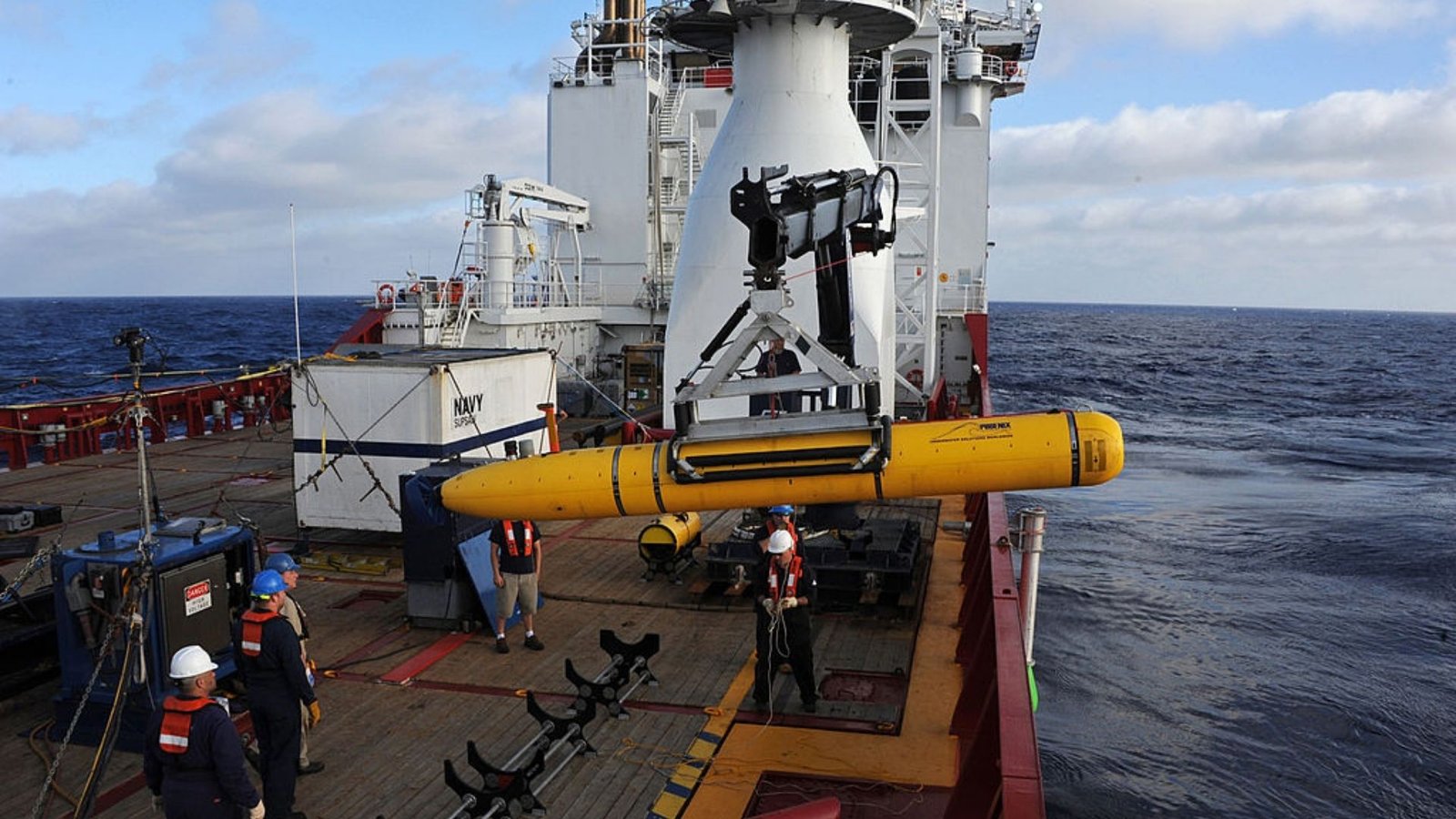
Autonomous and robotic submarines are rapidly transforming the future of naval warfare. Nations are investing in unmanned systems that can travel deeper, farther, and longer than human crews. These robot submarines can carry out missions such as surveillance, mine-hunting, and anti-submarine warfare with high precision and minimal risk.
Today’s most advanced unmanned underwater vehicles combine powerful sensors, long endurance, and growing levels of autonomy. Their modular designs allow militaries to adapt them for multiple missions on a single platform. That being said, let’s take a look at the most powerful military robot submarines in the world.
1. Orca XLUUV
The Orca XLUUV is one of the world’s largest and most capable autonomous submarines, developed by Boeing and Huntington Ingalls Industries. Measuring about 85 tons, it can travel an impressive 6,000 nautical miles thanks to its diesel-electric propulsion system. Designed to operate independently for long stretches, it can carry out complex missions without human intervention.
Its modular 8-ton payload bay allows the Orca to be configured for mine countermeasures, surveillance, electronic warfare, and even strike missions. The vehicle uses advanced sonar, autonomous navigation algorithms, and acoustic communications to stay hidden while receiving updates from command centers.
2. Snakehead LDUUV
The Snakehead is the largest unmanned submarine designed to launch directly from a U.S. Navy submarine. It focuses on long-endurance, deep-water missions that require larger payloads and advanced navigation systems. With its modular, reconfigurable design, Snakehead offers greater capability than earlier-generation UUVs.
Its architecture supports sophisticated autonomy, enhanced situational awareness, and high-endurance lithium-ion batteries.
Initially built to support intelligence and environmental reconnaissance missions, the platform is expected to expand into other mission sets over time. The U.S. Navy has already completed prototype testing, marking Snakehead as a critical machine for covert missions in contested waters.
3. Greyshark Autonomous Underwater Vehicle
The Greyshark is a highly advanced autonomous underwater drone known for its long range and strong reconnaissance abilities. At 6.5 meters long and weighing around 3.5 tons, it uses fuel cells to travel up to 1,100 nautical miles while cruising at 10 knots. Its current depth rating is 650 meters, with plans to reach 4,000 meters.
Equipped with 17 integrated sensors and robust sonar systems, Greyshark excels at underwater surveillance and anti-submarine missions.
A unique feature is its swarm capability, allowing several units to coordinate over distances up to 2.1 kilometers. It can also connect to satellites via a periscope mast, enabling real-time communication during remote or autonomous operations.
4. Bluefin-21 AUV
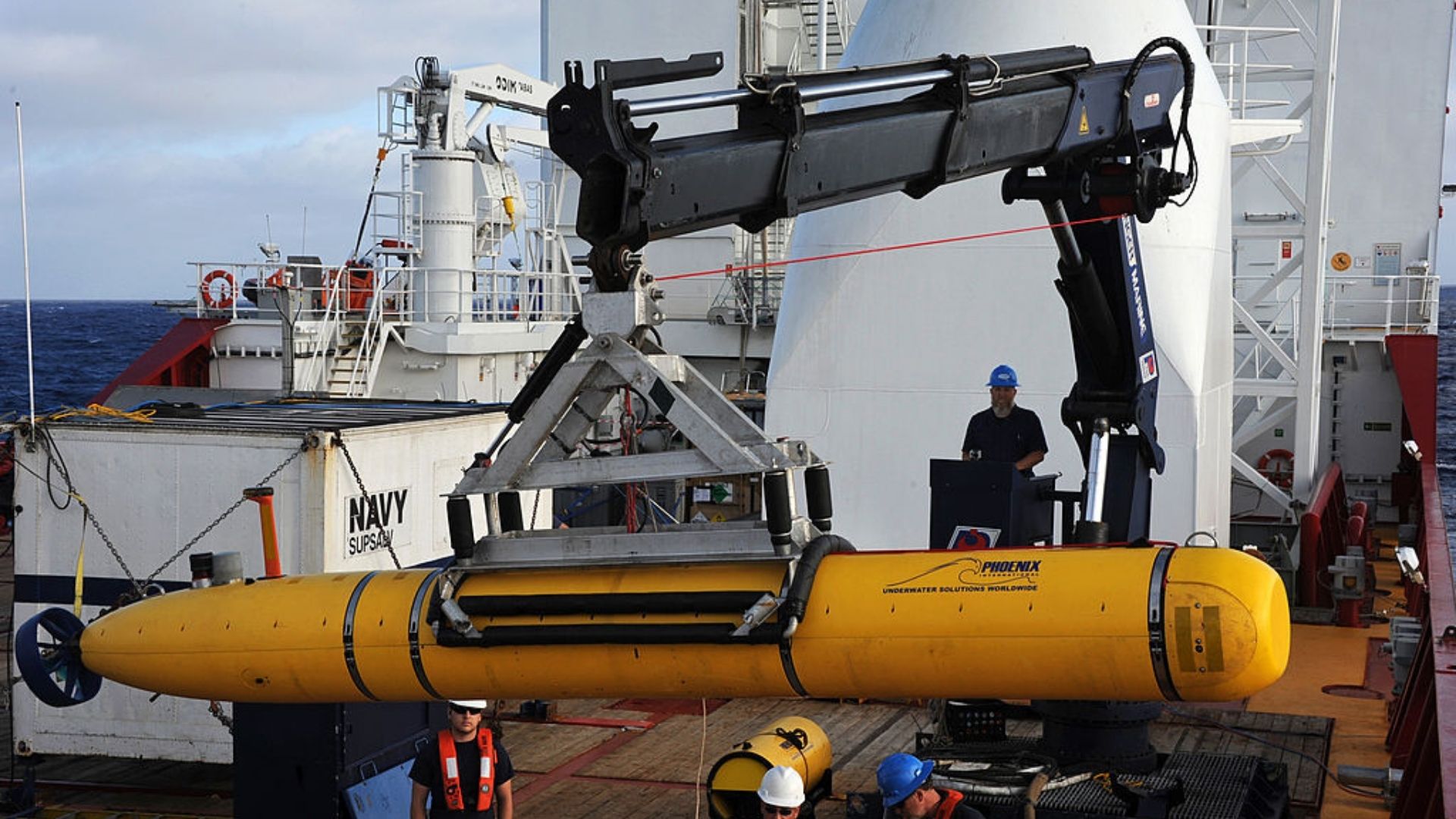
The Bluefin-21 is one of the most proven AUVs, famous for its role in the search for Malaysia Airlines Flight MH370. Measuring nearly 5 meters in length, it operates at depths of up to 4,500 meters. This feature makes it ideal for deep-sea missions.
Thanks to the modular batteries, the crew can quickly swap batteries and payloads to prepare for new tasks. Its senso suite includes side-scan sonar, sub-bottom profilers, and multi-beam echo sounders, giving it excellent mapping and detection capability.
Bluefin-21’s navigation system is extremely accurate, using inertial navigation and Doppler sensors for precise tracking.
5. Manta Ray (DARPA)
DARPA’s Manta Ray is a futuristic autonomous underwater drone inspired by the energy-efficient movement of marine wildlife. Built by Northrop Grumman, it features a diamond-shaped body designed for long-duration missions.
One of its most unique abilities is to anchor itself to the seafloor and enter a low-power “hibernation” mode to conserve energy.
The drone is modular and can be transported inside five standard shipping containers, making global deployment faster and easier. Its design supports long-range maritime operations that require minimal human support.
6. Knifefish UUV
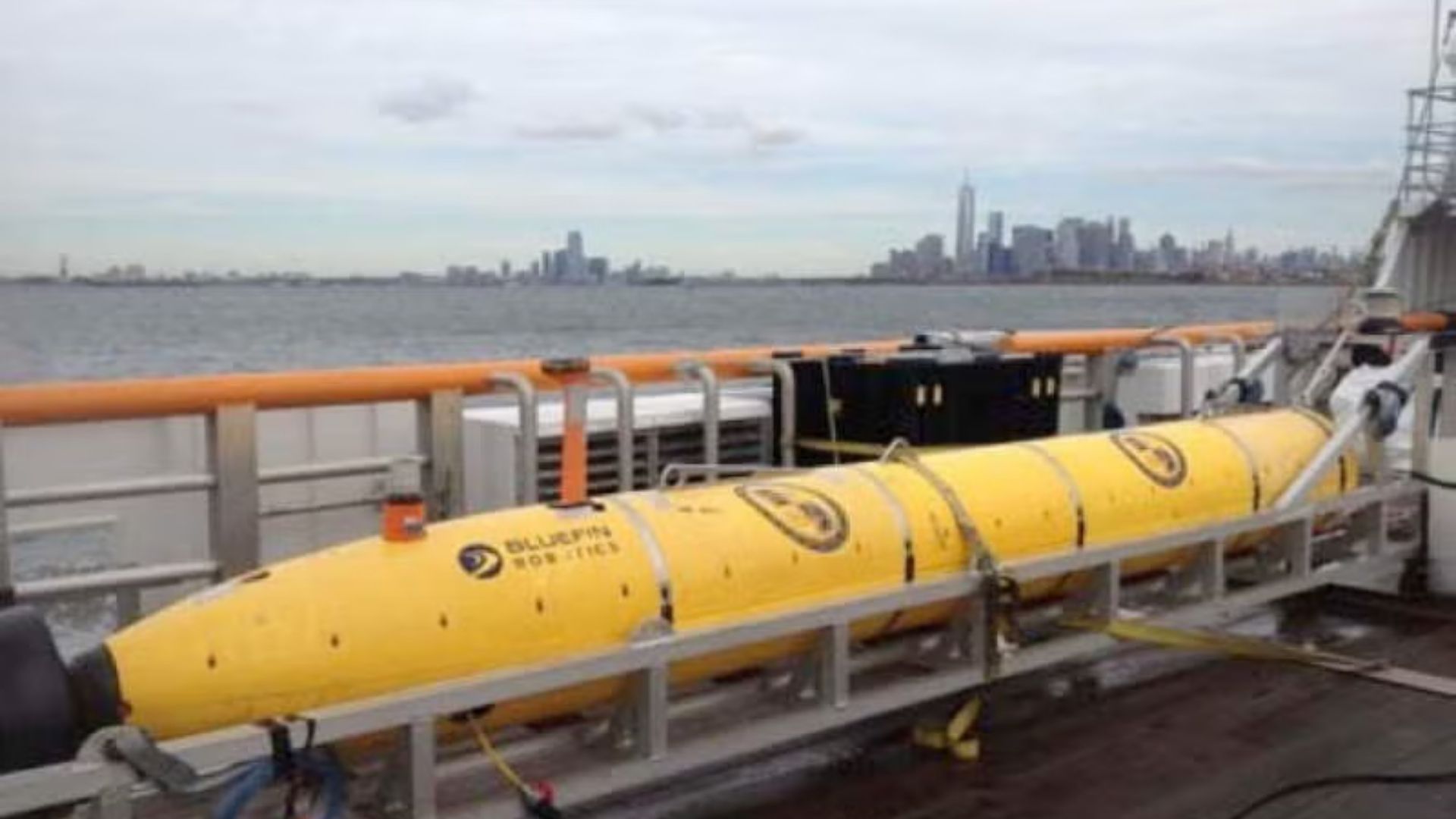
The Knifefish UUV was built specifically for mine countermeasure missions, making it one of the most specialized robot submarines in service. It is 6.7 meters long and weighs around 920 kgs, powered by lithium-ion batteries that keep it running for up to 16 hours.
The Block 1 version of Knifefish offers improved depth performance and more accurate target identification compared to earlier models. It features an open-architecture system that supports new payloads and mission expansions.
Working alongside the Littoral Combat Ship, Knifesfish keeps human crews out of dangerous minefields while improving mission effectiveness.
7. Poseidon
Poseidon, also known as Status-6, is one of the most powerful and controversial autonomous underwater systems ever built. Developed by Russia, it represents a completely new category of strategic weapon because of its nuclear propulsion and massive destructive potential.
Its combination of deep-diving capability, long-range autonomy, and nuclear payload makes it unlike any other military robot submarine in the world. Unlike conventional UUVs used for reconnaissance or mine hunting, Poseidon is designed for strategic warfare.
Conclusion
These seven robotic submarines show how quickly autonomous technology is reshaping modern naval operations. Each system brings a different strength, whether it’s long-range endurance, swarm capability, deep-sea exploration, or mine warfare specialization.
As autonomy, sensors, and battery technologies continue to improve, these systems will only grow more capable over time. They help navies operate more safely, efficiently, and persistently in contested ocean environments.
